SARAJEVO, Bosnia-Herzegovina (AP) — Reformists who ran on fighting corruption and clientelism in public office appeared set to win an important race in Bosnia’s elections Sunday that could give them greater sway over the direction of the country which has never fully recovered from its 1992-95 sectarian war and remains divided along ethnic lines.
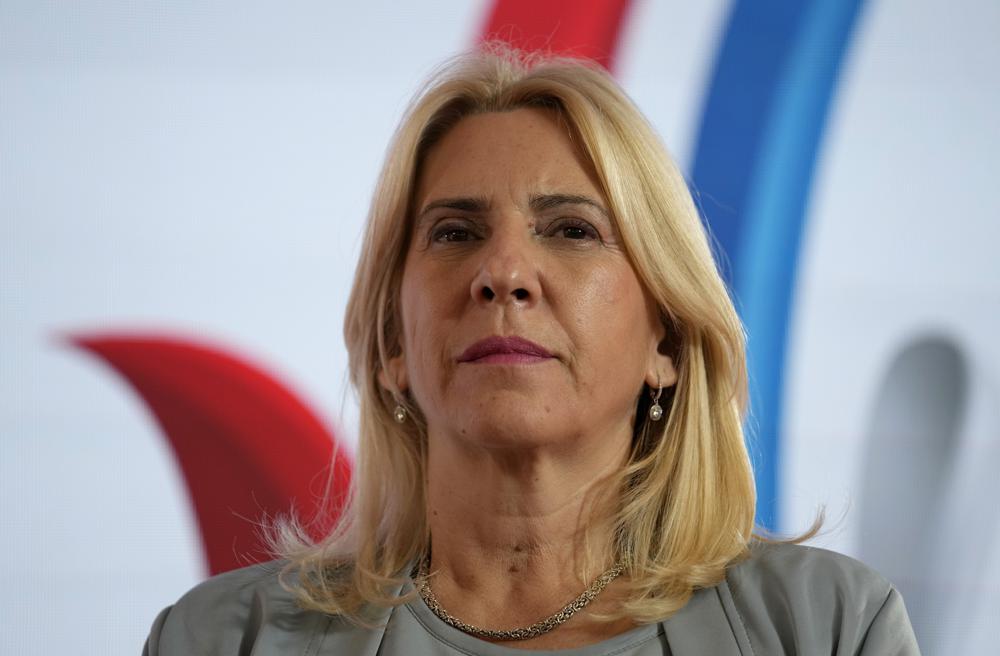
The first preliminary results released by Bosnia’s central election commission early Monday showed cooperation-prone contenders Denis Becirovic and Zeljko Komsic on course to win respective Bosniak and Croat seats in the tripartite presidency. However, the reformists were likely to be joined by Zeljka Cvijanovic from the strongest Bosnian Serb party – the secessionist and staunchly pro-Russian SNSD.
Moscow has often been accused by the West of seeking to destabilize the country and the rest of the Balkans through its Serb allies in the region, and the Sunday ballot was held amid growing fears the Kremlin might attempt to reignite the conflict in Bosnia to deflect attention from its campaign in Ukraine.
The election included contests for the three members of Bosnia’s shared, multiethnic presidency, the president of one of its two highly autonomous parts, and parliament deputies at different, in part overlapping, levels of governance.
Bosnia’s institutional set-up, often described as one of the most complicated in the world, was introduced by a U.S.-brokered peace agreement that ended the war in the 1990s between its three main ethnic groups — Muslim Bosniaks, Orthodox Serbs and Catholic Croats. Under the terms of the agreement, Bosnia was divided into two highly independent entities— one run by Serbs and the other shared by Bosniaks and Croats — which have broad autonomy but are linked by joint, multi-ethnic institutions. All countrywide actions require consensus from all three ethnic groups.
If the preliminary results hold, Cvijanovic will take over the post from her political party’s boss, Milorad Dodik, who chose to run for the president of Bosnia’s Serb-run part rather than seek a second term in the shared, countrywide presidency.
Both Dodik, and his main contender, Jelena Trivic, proclaimed victory in the race for the Bosnian Serb president. Their claims will be tested later on Monday, when the election commission is expected to announce preliminary results of the presidential ballot for Bosnia’s Serb-run part and the races for parliament deputies at the state, entity and regional levels.
Prior to the polls, analysts predicted that the long-entrenched nationalists of all ethnic stripes, who have enriched cronies and ignored the needs of the people, will remain dominant in the legislatures at all levels, largely because the sectarian post-war system of governance leaves pragmatic, reform-minded Bosnians with little incentive to vote. Election turnout on Sunday was 50% or over 2 percentage points down from the 2018 general election.
On Sunday, shortly after the vote count begun, Bosnia’s international overseer, Christian Schmidt, announced in a YouTube video that he was amending the country’s electoral law “to ensure functionality and timely implementation of election results.” Schmidt assured citizens in the video that the changes “will in no way affect” the votes cast on Sunday.
The 1995 peace agreement gave broad powers to the international high representative, the post currently held by Schmidt, including the ability to impose laws and to dismiss officials and civil servants who undermine the country’s fragile post-war ethnic balance.
The changes imposed by Schmidt will affect the size of the parliament of the Bosniak-Croat part of the country, and prevent blockades of the formation of its government.