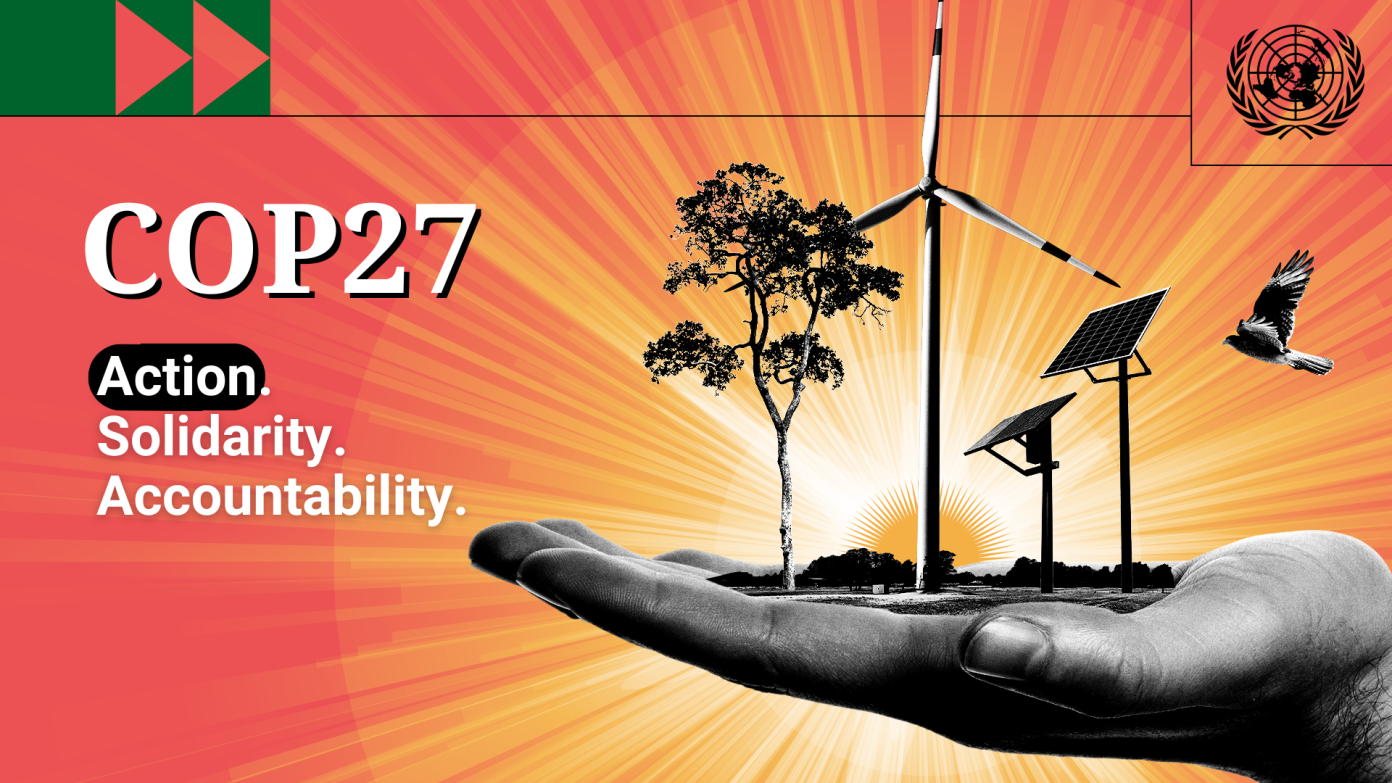
COP27 ended with a bang — an agreement between the more affluent and poorer countries to create a fund to pay for damages caused by climate change. For three decades, emerging nations have asked for such compensation, noting that the developed world is responsible for the emissions.
Specifically, negotiators will set up a “loss and damage” fund to give some relief to Latin America, Asia, Africa, and the South Pacific countries. The goal is to cut greenhouse gas emissions in half by 2030 to limit temperature increases to 1.5 degrees Celsius of 2.7 degrees Fahrenheit. A failure to do so means more extreme weather events and a costly economic fallout.


While the agreement is historical, the details are unknown. Most significantly, it is still determining who will get funded and who will contribute. The European Union agreed, pressuring the United States to follow. But this month, the Republicans took over the U.S. House, making it unlikely it will consent to bankroll such a fund; many of those members deny climate change is a problem — much less one that U.S. should pay to remedy. At the same time, there’s no word on when it will be finalized or operationalized.
“How much warming are we willing to accept?” ask Pierre Friedlingstein, a climate scientist at the University of Exeter in the United Kingdom. ”If we do nothing in mitigation, we are a decade away from massive extremes. Maybe it is already too late. If temperatures increase, the disasters will get more frequent, and the damages will become even more significant. We have not seen a peak in emissions. We have to reduce by 40% by 2030, but they are up 1% this year.”
He points to record wildfires in the United States and Canada and massive floods in Pakistan that displaced thousands and caused $30 billion in damages. Flash flooding occurred in Pakistan this summer, caused by heavy rains running off of deforested mountainsides. Thousands of people were displaced. Although most moved to other sections of Pakistan, the concern is that climate change could cause mass migration and force them to move to Europe or the United States.
That’s why it is in the interest of developed countries to create funds for loss and damages — one that gives these emerging nations money to “adapt and mitigate” to climate events. That includes building resilient roads, bridges, and buildings. It also involves investing in the latest and most remarkable technologies — energy efficiency and low-carbon fuels.
Time is of the Essence
Indeed, decarbonization is the key to curing climate change. And while the conference held in Sharm El-Sheikh, Egypt refused to agree on language to end fossil fuel usage, it did agree that phasing them out is ultimately necessary. Success also requires ending coal, oil, and natural gas subsidies.
Notably, the globe’s two biggest emitters — China and the United States —agreed to meet to foster solutions. China has set net zero goals for 2060, while the United States has done so for 2050. China’s goal is to cut carbon-heavy fuels by 20% by 2025. Meanwhile, the United States is investing $369 billion in its clean tech economy through the Inflation Reduction Act. It will also cut greenhouse gas emissions by 40% below 2005 levels in 2030.
Brazil is also a significant contributor to emissions. But the newly-elected president, Lula da Silva, stressed that his government would prioritize the environment. Lula came to COP27 with all the fanfare of a modern rock star. He spoke publicly, emphasizing the need to preserve the Amazon rainforests, setting a goal of zero deforestation by 2030.
“The threat to the amazon forest is a combination of climate change and human impact slash and burn and agriculture. The more you fragment the forest, the more vulnerable it becomes to climate change and efficient controls. If it is not stopped, we can expect more warming,” says Richard Betts, a scientist with the Met Office Hadley Centre in the United Kingdom.
“Can deforestation of the Amazon be slowed? We are not past the point of no return. The forest helps to sustain its local climate. The forest maintains a wet climate,” Betts said at COP27. “The countries that emit the least are already the hottest and suffer the worst droughts. They have more extreme climates, endangering human health.”
The Intergovernmental Panel On Climate Change says that humans are responsible for global warming with 99% certainty. A failure to reduce emissions could upend global markets. Witness: the insurance industry losses in 2017 were the greatest ever at $138 billion, says the International Association of Insurance Supervisors and the Sustainable Insurance Forum. Total economic losses, meanwhile, were $340 billion. Hurricane Ian, which hit Florida in September, will cost between $60 billion and $70 billion.
No country is immune, and decarbonization is more critical than ever. Indeed, the private sector is rising to the occasion. Take GGE: it is helping to decarbonize companies, investing in technologies, and using those tools to clean up industrial processes and commercial operations It’s working, allowing businesses to reduce emissions and save money. The focus is on emerging energy resources such as batteries, wind, hydro, solar, and green hydrogen.
“Not only do countries have to decarbonize their whole economies, but they also need to help transition the developing economies and provide funding for adaption,” says Professor Friedlingstein. “Tropical regions are already feeling the pain. They need support.”
COP27 recognizes that developed countries are responsible for most of the globe’s emissions and that developing countries are paying the price. They have agreed to set up a fund. Now they must determine who will fund it and how much money they will put into it. The discussions are often endless — time that some countries don’t have.
___
About Contributor
Ken Silverstein
Since the late 1990s, I’ve covered energy, beginning with the rise and fall of Enron — first as a magazine writer before becoming a columnist and editor. For nearly 11 years, I’ve been a columnist for Forbes. My focus has shifted from the ‘old energy economy’ to the ‘green energy economy.’ My stories, which cover the globe, have appeared in, and have been cited by, dozens of publications and broadcasts. I’m also the editor-at-large for Environment+Energy Leader and the Coalition for Rainforest Nations. My features and my columns have won several national awards.
The original story can be viewed here