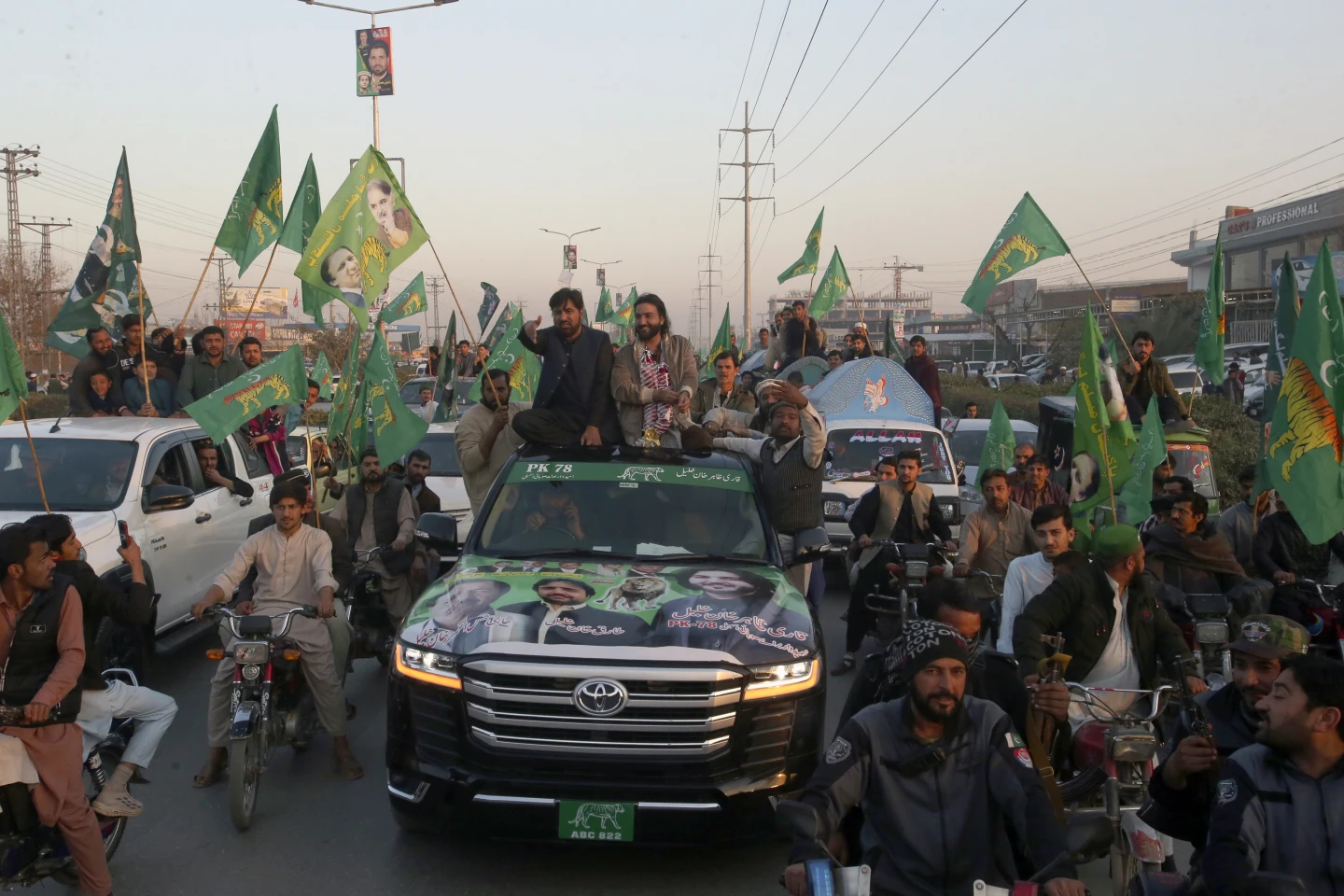
ISLAMABAD (AP) — Pakistan’s parliamentary elections left no clear winner.
Allies of imprisoned ex-Prime Minister Imran Khan won the most seats in the lower house of parliament in the elections last Thursday. It was a shock outcome given the obstacles: His Pakistan Tehreek-e-Insaf party could hold no campaign rallies, had no polling agents on election day and faced internet restrictions. They won 93 out of 265 National Assembly seats. It’s not enough to form a government, however.
The other two mainstream parties, led by Khan’s rivals, also failed to secure enough seats to form a government on their own. They are the PML-N of former Prime Minister Nawaz Sharif and the PPP, led by political dynasty scion Bilawal-Bhutto Zardari. They won 75 and 54 seats respectively.
It’s Pakistan’s parliament that chooses the next prime minister, so having a majority is crucial.
WHO’S IN THE RUNNING?
Not Imran Khan. He’s in prison and barred from holding public office. The PTI said it doesn’t want or need an alliance, claiming it has enough seats. It doesn’t. The party has public support — as shown by the number of seats that candidates scooped up — but it doesn’t have the backing of political peers.
Analyst Azim Chaudhry said the other parties have “grievances and grudges” against Khan from his time in office and that they’re not ready to shake hands with him because he’s made it clear he doesn’t want to talk to them.
The PML-N and PPP started coalition talks once it became clear that Khan loyalists had taken a lead. They claim to have pacts with smaller parties and newly minted parliamentarians, including defectors from Khan’s side, to bump up their seat quota to the magic majority number of 169.
But knowing who could become prime minister from this ragtag crowd is trickier.
Party insiders say Sharif isn’t suited to a coalition because of his temperament. His younger brother, Shehbaz, led a coalition after Khan was ousted from power and is regarded as more accommodating.
And then there’s Bhutto-Zardari, a former foreign minister. It’s not clear if he’ll want the top job in a government that came to power through such a tainted election.
But he and his party are key to any coalition because they have the third largest share of seats. Not for nothing is his father, Asif Ali Zardari, regarded as a kingmaker. He won’t do something that jeopardizes his son’s political future, like joining hands with Khan, according to Chaudhry.
There’s a chance of an outside candidate becoming prime minister to keep all sides happy, but it’s hard to see the two families relinquishing their claim to power.
WHAT’S THE MOOD?
People are unhappy about the way the election unfolded and how votes were counted. Legal challenges are underway to contest some results. There are protests and allegations about vote-rigging, with Khan’s supporters in particular angry about what they perceive as electoral theft. Police have used tear gas to disperse crowds and arrested dozens of people in sporadic demonstrations that have broken out across Pakistan. The international community and rights groups have expressed concern about voting irregularities.
WHAT HAPPENS NEXT?
Pakistan’s president has to convene the inaugural session of the new National Assembly within 21 days of the election, or Feb. 29. Lawmakers are sworn in during that session. They submit nomination papers for a number of key roles, including the speaker and leader of the house. After these positions are filled, a new prime minister is elected through a parliamentary vote, a task that requires a simple majority.