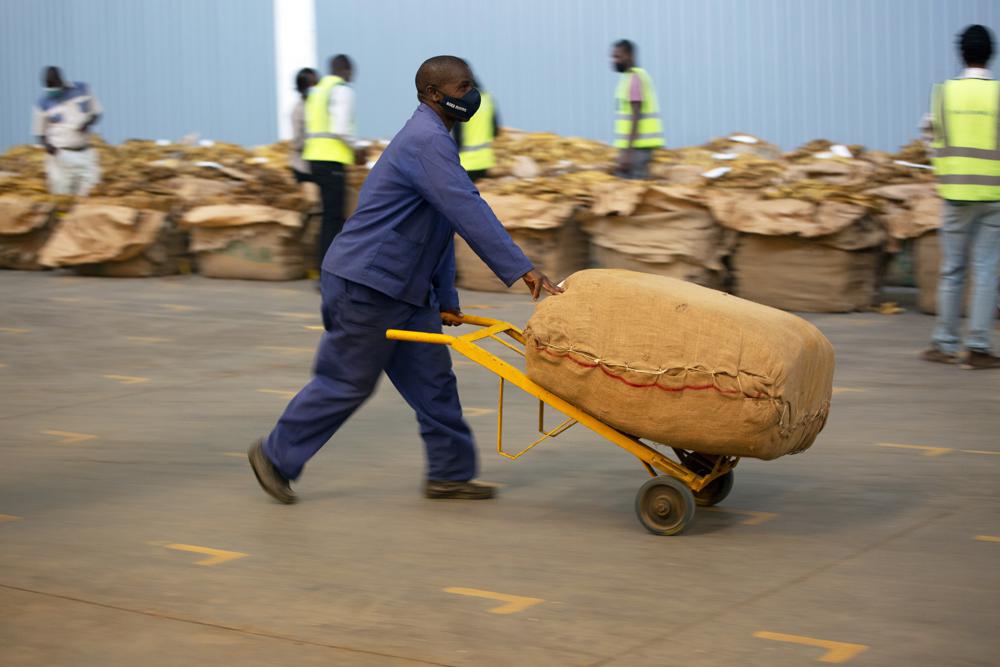
HARARE, Zimbabwe (AP) — Zimbabwe’s tobacco is flourishing again. And so are the auctions where premium prices are being paid for the “golden leaf” that is exported around the world.
Most of the growers are Black, a historic change from when tobacco was largely produced by white farmers. But many of the small-scale farmers complain they are being impoverished by middlemen merchants who are luring them into a debt trap.


Rosemary Dzodza recently traveled 200 kilometers (125 miles) to the capital, Harare, with her tobacco crop for what she hoped would be a good payday.
The 60–year old farmer ended up sleeping in the open for two weeks awaiting payment. When the money eventually came, it was just a tiny fraction of what her tobacco had actually fetched at the auction.
“My tobacco sold for $7,000, but I am only going home with less than $400,” she said, trembling with anger. The rest of the money went to the merchant who had given her a loan to pay for fertilizer, seed, labor, firewood for curing, and even household food items under a contract growing scheme.
In addition to repaying the loan with interest, Dzodza was obligated to sell her crop to the merchant, at the price he set. The merchant then sold the tobacco to the highest bidders at the auction or to wealthier merchants, mostly buyers who will export the crop to China.
For more than 60 years, tobacco was a lucrative export crop from which white farmers profited. But after the year 2000 when Robert Mugabe’s supporters began seizing white-owned farms, often violently, tobacco production plummeted. The flue-cured tobacco crop dropped from a 1998 peak of 260 million kilograms to just 50 million kilograms in 2008.
Since then tobacco production by Black farmers has grown. A few thousand white farmers produced the bulk of the tobacco crop before the land reform but now the number of Black growers, mainly small-scale, has risen to more than 145,000. The recovery has been stunning in recent years with Zimbabwe’s tobacco crop estimated to be 200 million kilograms this year, up from 180 million kilograms in last year.
Zimbabwe’s commercial banks used to give loans to white farmers so they could purchase inputs for their crops. But the banks pulled out years ago because the government has not issued transferable ownership deeds to the Black farmers resettled on the formerly white-owned land.
The contract growing scheme helped Black farmers desperate to get in on the tobacco bonanza. It was initiated mainly by Chinese buyers but is now so lucrative that it attracts dozens of Zimbabwean merchants.
According to the regulatory body, the Tobacco Marketing Industry Board, 96% of tobacco farmers have been financed under the contract growing scheme.
The contract system is hailed for reviving tobacco and cementing Zimbabwe as Africa’s biggest grower of the crop. But many Black farmers say greedy merchants are impoverishing farmers.
Farmers are charged high interest on their loans and many fall prey to predatory contractors, said Tobacco Association of Zimbabwe president George Seremwe.
“It’s a loss-making venture. The farmer is always in debt because as soon as they repay the loan, they have to take out another one. Year in and year out they are in debt,” he said.
Some lose livestock — their only wealth — to merchants after failing to repay the loans due to poor harvests, while “unethical” merchants are also “a menace,” said Seremwe.
The Tobacco Industry Marketing Board this year released 20,000 farmers from contracts with merchants who tried to cheat them by bloating the value of inputs supplied.
More than 90% of tobacco farmers want out of contract growing, but cannot find alternative funding, according to a study published last year by Tobacco Control, a journal on tobacco research.
Close to 60% of farmers said they were in debt, according to the research.
“There is no evidence to suggest that tobacco growing, in its current state, has benefitted the (Black) tobacco farmers. Tobacco farmers are largely victims, rather than beneficiaries of the sector,” the report said.
“The model is now expensive and needs to be reviewed,” Reserve Bank of Zimbabwe governor John Mangudya told state media in April after complaints by farmers.
At the heart of the problem is the inability of resettled farmers to raise their own finance through banks, said economist and analyst John Robertson.
“Banks fear that they will be left holding a piece of paper if a farmer fails to repay. They can’t touch the land,” said Robertson.
The government says the solution lies with the state-owned Land Bank launched in April, which would loan farmers money for their tobacco crops at reasonable rates. Some are skeptical, but farmers such as Dzodza can only pray for its success.
“Otherwise I will have to remain in contract farming,” she said. “It’s like we are chained.”